Showing posts with label Social. Show all posts

Wednesday, May 12, 2010

Power Crisis in 'ADVANTAGE KARNATAKA'


Living in the so-called Silicon Valley of India, Bangalore, and watching the proceedings in the past few weeks, its hard not to react. The lack of statistical data may make this post look like an outburst but its the reality. There are two events happening here, in tandem. The first one is supposed to be a big event, or a campaign which is expected to lead to series of events. The government of Karnataka is driving it and is called "Advantage Karnataka". This seems to be a borrowed idea, earlier executed by another BJP stronghold, industrial state of Gujarat, which was then called "Vibrant Gujarat". This basically tries to project Karnataka as an investment destination.

The second event is the power crisis in the state, which is covered up totally in the campaign, as any campaign would be. Most parts of Bangalore is experiencing around 4 hours of power shutdown everyday and sometimes more. Mostly, during daytime - thanks to them as a householder, we get some sleep after all. But industries, who are under real stress, would be cursing them due to the extra operational cost. Most IT companies, which renders the tag of "Silicon Valley" to Bangalore are running with Diesel Generators, which is a huge and unnecessary burden for them. There are so many other sectors which gets affected due to this lack of power supply like agriculture, manufacturing and education, which I did not mention due to lack of information.

It looks funny to me to see this campaign, which boasts of many things, one of which being "Good infrastructure". Does lack of power still be termed as "Good infrastructure"? With whatever basic understanding I have, with which I can not make any administrative decisions at such high level, I guess electricity is one of the basic needs to run an industry. I am sure that some or the other investor, would raise this issue in each of these meetings and I am more than sure that the government (politicians here) has convincing and pre-planned answers prepared by the Administrative Babus and Execution Engineers. More than those answers, they would be satisfied with false promises and subsidies.

Criticism about the government and its functioning never ends and the government never bothers it, as well. Leaving criticism, on the constructive side, I wonder, how such an enormous power demand is being met by the US and other European nations. These countries' power demand is multi-fold higher than what Karnataka (or India as a whole) is facing. What I am given to know, even in the US, most of the demand is satisfied by thermal power generation, which is same in Karnataka, equally backed up with hydel power generation. Why don't the government take these nation's power generation as a model to work on, as it tries to make Vibrant Gujarat its model for it Advantage Karnataka campaign. Just by these campaigns, it can not be successful in bringing in the real investment. It might succeed with a few initial investments, by hiding or manipulating the facts. But the truth will surface out soon which will trigger unhappiness among the investors, who in turn will campaign not to invest in the state. Real investment is a continuous process, which will not happen with this infrastructure.

I think the government was too busy in imitating Gujarat's campaign, that it forgot to investigate more on power demand and supply scenario in that industrialised state. I had hardly come across power shortages and power cuts in Gujarat when I lived there and it is still being agreed as a fact by my friends who live there.

Note: I tried to find some statistical data, with not too many success. One of the informative web pages I came across during this process is quoted below. Please take time to read that for a little better numerical data, though not from any validated sources.

http://www.praja.in/en/blog/bhamyshenoy/2010/02/08/karnataka-power-crisis-need-new-thinking

Saturday, July 25, 2009

Backside of 'Silicon Valley of India'

Two days back, I went to visit my friend working in one of the companies located in one of the IT parks in Bangalore, Bagmane Tech Park. As his office was closer to the so called back entrance, I was waiting near that. It took him sometime to come, which gave me enough time to feel the place. There were some handheld carts selling some snacks. A little further, there were a few shops. A restaurant, a bakery and a small shop selling tea, biscuits and cigarettes and still further where the road takes a turn, on the opposite corner was a small house, which opens into a quite large settlement of people below poverty line and lower middle-class. Also there was a very small open terrace temple with three idols underneath a big tree, which is a common sight in India.
The entire region was crowded by the grownup IT kids, I mean it. While a few people were going back home, most of them were in front of the bakery, drinking tea or smoking out their easy money. Most of them were using a plastic 'use and throw' tea cup for convenience of taking it with them, as they move. I realised the actual meaning of 'use and throw' just within a few minutes, as wind blew heavily. The first thing any idle person there, would notice was the tea cups. There were hundreds of them lying around the area and moved by the heavy winds. Now and then some popcorn sound, as vehicles crush these cups lying on the roads. I wonder if those IT kids ever notice this nasty sight and worry about it. The worst part, which touched my heart was that all these cups were getting collected in front of the doorstep of the small house in the opposite corner. I am sure, it would be a headache of those living there. Immediately, a media report of few years back flashed in my mind. It talked about the class divide in Bangalore as one of the reasons for riots which happened during one of the veteran film actor's funeral. Lot of IT companies and other establishments were targeted in some stone throwing incidents.
Now, I understood that media report in its real sense. One class, which works and lives most of its time inside that air-conditioned, highly decorated, posh buildings, coming out for a few minutes to drink tea, pollute the region and create aversion in the minds of locals. The other class, which lives most of the time in the region polluted by the previous class, still managing to clean and survive, accumulating everyday aversion in their minds, though those posh buildings are a stone throw away from their homes. I wonder how these IT kids, change their perspective immediately after entering their office or their home. So, Is it carelessness for the other class and a place where they are not going to spend time or just the lack of attitude?
Information Technology, Reebok, Nike and Puma had percolated from the west. Every kid was westernised in that sense. But the cleanliness and attitude towards the society are still finding its way to the so called Silicon Valley of India.
I wonder how will the change come to this society when most of the population either contributes to such problems or does not care about it. A very few people are moved by it, but do nothing but write columns and blogs (like me, I am sorry). Only a meagre part of the population really think and do something for it.

Hey kids, The Van Heusen, Allen Solly and Red Tape does not make you a man. Its the attitude.

Sunday, March 16, 2008

Remote interest!

This topic is along the same lines of my earlier post "Is this India?"
This is a narration of a small incident that happened yesterday. I, along with my father went to a very small village named Thalampatti, some 15 Km from the district headquarters, Pudukkottai. It is also necessary to explain the context of our visit. There is a small temple which was recently renovated at a huge cost of around 20 lakhs by all those people who owned it, maintained it or just had customary bondage. After this renovation (called Kumbabhishekam in Tamizh), by custom, there should be pooja for the next 48 days. Yesterday was one of these 48 days. Each day's pooja happen at a cost of few hundreds of rupees or a thousand.
My father and I reached the temple quite early. My father was explaining me the new developments and modifications, as this was my first visit after the renovation. During all this time, the pujari was preparing for the pooja, assisted by his aides, one man and two boys. While waiting for other people to come and start the pooja, we both sat in a shade and started browsing the books that we had. I had a book named "Nilamellam Ratham" (which means 'Land, full of blood' in Tamizh). This book is about the political history of Israel and Palestine. One of those boys who was helping the pujari, after finishing his job, stood behind me and started telling to others that this book is about Palestine, the relation between Palestine and Yasir Arafat and more, while others were uninterestedly listening.
Then the pooja started, he was totally engrossed in helping, commanded by visitors and pujari himself. It would not be fair just to mention "help" everywhere as his work, which does not give any significance of what sort of work did he do. He was wiping and cleaning the floor, fetching water for the pujari and so. The pooja went on for more than an hour. It was hot and sultry day, with little showers last night. So, once the ritual was over and prashad was provided, people went to shades to rest and gossip. I was one among those. After an hour or so, we prepared to leave. I went inside the temple to take the book from the window where I had kept it, while the pooja started. I was amazed to see this boy sitting near the window, drenched with sweat and reading the book.
I said, "Hi, do you like the book?". Pat, came the answer with a smile, in a continuous, uninterrupted flow, "Yeah! I like it very much. I had gone through the first few pages when I found this book in a local hotel, which also runs a book shop". The hotel and the book shop he mentioned can not be interpreted in terms of the hotel or book shop that we are used to, in the cities. The village I m talking about might comprise of 50 to 75 families. I could not provide the exact data, due to lack of statistics. The hotel and book shop he mentioned was in the next big village, which acts as a hub for few other villages, included. To bring a picture in your mind, all these shops are just made of thatched roofs.
I got curious to talk more with this boy. The main reason was a direct comparison of this boy with few of my friends in the city, who came across this book and wondered if such good books are available in Tamizh.
We continued our talk for next few minutes, while I came to know a lot of interesting things from him. Below is a narration of our conversation,
Me: Do you go to school?
Boy: Yes. I study 8th standard in Nachandupatti.
(Nachandupatti is a little bigger village. But this school is quite big for the size of the village)
Me: What subjects do you study? (I started saying Ariviyal, which means science in tamizh, to make him confortable to explain in Tamizh also)
Boy: (continued in English) English, Tamizh, Science, Social Science and Maths.
Me: Do you have enough teachers in your school? Does the teacher come to class properly? I heard that in villages, the teachers don't come to classes properly.
Boy: No, No. They come regularly and teach very well. My school has got centum (which means everyone has passed) results in SSLC exams, last year and before. He (showing the other boy) studies in this school (shows the near by building). I too studied in this school till 5th standard. Here, teachers don't come regularly.
Me: Is this a primary school.
Boy: Hmmm. This school is upto 5th standard only. Then you have to either go to Nachandupatti, which is around 5 Km from here, or to Pudukkottai which is around 15 Km from here. They have till 12th std. My school has good facilities. They have science lab and computer lab too.
Me: What is your school timing.
Boy: From 9:45 to 4:45, with half an hour break for lunch.
Me: Do you take lunch? (I wanted to know if Mid-day meal scheme of TN govt is applicable to him)
Boy: Yeah! I take lunch from home.
Me: How much is your yearly fees?
Boy: We need not pay. Ours is a government school. But few Chettiars in that village (he named a few) also help financially (which I understood for the maintenance of school).

Though I wanted to talk more, I was called to board the car. While I was moving, I finally asked him,
Me: Do you like books?
Boy: Yeah! very much. I had written two novels and got prize from "Rajeshkumar" (I think he is a famous novel author in Tamizh). I was awarded the "Best Orator" at Pudukkottai district level by the Governor.

I was jolted with surprise.

Me: Oh! This book is my friend's book. Otherwise I would have given you this. Can you give your address.
Boy: Not required. I ll be somewhere around the temple only.
I was moved so much, that this little guy is so capable, interested but lacks resources and nurturing.

This little boy, "Tamizharasan", which means "King of Tamizh", roams around the temple bare bodied, only with a trouser. I also noted that his body was full of scars. Later I came to know from my Grandmother that he got burnt in a fire accident, when he was refilling the kerosene stove. He had to be treated for few months at a hospital in Tanjore and his parents had to spend a couple of lakhs, just for treatment by taking loan. So, they could not afford for plastic surgery, though advised by the doctors.
This little guy in a remote village has a 'remote' interest of reading and writing books, which he cant afford to buy. But this remote temple in the same remote village is offered few lakhs of rupees for renovation and maintenance.
I was so moved that I consulted one of my uncle, to know whether this book can be bought at Pudukkottai where I can afford to spend few hours while returning back. I was told that Sunday was a holiday and all book shops would be closed. So, I made up my mind that I would buy and send this book to him, along with my mother who would visit this temple, some time in the next week.

Wednesday, December 19, 2007

Is this India?

I and my office colleagues had a very nice, fun and food-filled year end party yesterday evening. We spent our time in a bowling alley and a restaurant in the hot, entertainment district of Bangalore - Brigade Road and Church Street. After knowing the money spent for 21 people which was around Rs.13000, I was pondering on a not very uncommon question, "Is this India?". One of my colleague often says, "This (Bangalore) is not India". I just had turned this statement into interrogation. I doubt this can be claimed - "India".

This would not have thought about it, if I had not glanced a few pages of the book "Everybody loves a good draught" by P. Sainath. I wish, we be informed of the facts, even though not analyse. Below are some excerpts from this book,

On Tendu leaf-collectors of Surguja district in MP - "For each gadda (bundle) of fifty leaves, the leaf-collector gets 30 paise. If Puthuli manages a hundred gaddas a day, she will have earned Rs.30. In the early days of the season, she averages between eighty and hundred gaddas daily. Only very rarely can she put together more than a hundred gaddas"

On labourers rather slaves of Bolangir district of orissa and vizianagaramdistrict of AP - "Almost all the laboureres are migrants from the Kalahandi-Nuapada and Bolangir areaas of Orissa. They are trying to escape hunger at home - by slaving at brick kilns in AP. Adolescent labourers stagger out of the pit, carrying around 20 kg of bricks towards the stocking area, passing an old man simply unable to cope with the 45 kg of bricks he is lugging. The bodies of all those working here are caked in a film of brick dust that re-appears within minutes of wiping it off. Many have developed rasping cough, apart from less visible but no less dangerous respiratory problems. Each brick he carries, weighs about two and a half kilos and he carries twenty of them. In the course of the day, he could make forty-five trips between pit and yard - a distance of 25 to 50 metres depending on which end of the stocking area he is headed for. And he'd be lugging along 45 kg on every trip. Each carrier does this with a half-running goose-step of a gait. They maintain this sort of rhythm to avoid dropping the bricks and to be able to do the required number of trips. When the old man with or without the aid of his family members has lifted nearly two tonnes of bricks in this manner, they earn around nine rupees."
(Note: Sentences not in same sequence as they appear in the book)

My pondering last night, involved some basic mathematics. We had spent roughly Rs.600 per person for entertainment and food, though not for hunger. To earn this money the brick kiln labourer quoted above would have to carry 133 tonnes of brick on his shoulder, or to put it the other way, he would have to lug for 65 days to earn this. To earn the same money the leaf-collector would have to collect 2000 gaddas or 100000 leaves, almost breaking her back.

when ever in the past I came across some one (mostly westerners and media) mentioning India as a Third world country, my ego wouldn't have been silent. But with such facts, I think I should rather go by the reality, rather than pride.

'Pondering' is effortless. But 'Only Pondering' is meaningless...

Monday, December 17, 2007

Respect - Ingredient of the Soil

Does this topic make any sense? Obviously not, in the logical mind. Even not for me, until I realised it before a few days.

Major part of my life had been spent around Coimbatore - the ancient Chera kingdom. My birth place and my native place is in the ancient Pandya kingdom. The languages spoken in these two parts of current Tamilnadu are distinctly seperate. This was the only thing I observed all these years and of course having lived so many years I had inherited a large part of Coimbatore language. Though, I had heard from various sources that these sect of people from the ancient Chera kingdom express their respect in their language itself, I had not observed it so keenly as I was a part of the sect before I migrated to various places for my occupation. I had lived in different parts of India. Few worth-mentioning Tamizh speaking parts are Tiruchirappalli, Pudukkottai and Chennai. More to this I had the opportunity to listen to almost all flavours of Tamizh during my under graduation years.

Recently, I visited Coimbatore after a long gap. Due to the feel of various dialects of Tamizh that I have had earlier, I analysed their language to a greater depth, this time. It was so sweet and soothing. These people not only express respect in their language, as I had been told earlier, they also express kindness. I would like to quote one of the incidents that made me say this. I was travelling in the city bus to an unknown location. I was not aware of the exact fare. So, I gave the conductor Rs.10. The actual fare was Rs.6. While giving the ticket, the conductor asked "oru ruva irukaang saami?". Due to my limitation in English, I could not directly translate it. But, apart from the fact that it was full of respect, it was very very kind, which is not a common trait found among the city bus conductors. If a bus conductor could speak so sweet, I could imagine the extent of respect and kindness these people offer to others.

This is apparently not taught in school. It could only be an ingredient of Chera soil, where these people are born and are living. After writing so much about this language, it would not be fair enough to finish the topic without mentioning that, the language is called "Kongu Tamizh" and this soil is called "Kongnadu".

Saturday, November 04, 2006

Aerobulance

From the day, I started living in the big cities of India, I m worried about the clumsy, undisciplined road traffic. Indians including me are highly ambitious while it comes to driving. We always go to achieve the worst possible estimate of time on the road. Traffic jam, choked road, expected diversions (actually traffic diversions are un-expected events, but not in India) – nothing stops us. Increase in literacy rate, increase in road accidents, increase in vehicle count, nothing has created interest in road rules. Our road rules are only on paper.
While I was young, growing up in a small urban, I used to see Lord Yama in the form of road accidents. But now, having lived in different big cities of India I think Lord Yama has another avatar (Different manifestations of a God according to Hindu mythology) too, on the road, in addition to the road accidents.
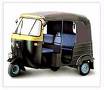
The other day, I was traveling along the Brigade road in auto-rickshaw. It was a typical Bangalore evening where the entire landscape turns into a free pub with flashing head lights and rock noise from vehicles. Amongst this rock, I was able to hear a high pitch wailing. It was from an ambulance. Never before I had seen (even tough imagined a few times) an ambulance struck in traffic. My curiosity was aroused. I peeped out of the rickshaw to see the surrounding herd (of vehicles) and ensure that my imagination were correct. The road on our side where the ambulance howled was halted by red signal. The traffic constable at the signal stopped the vehicles from other sides manually and let our side move. Bangalore has no differentiating factor between the junction signal and the normal road. We along with the ambulance crossed the road but yet choked up. I could see people rushing behind the ambulance to go fast and cross the junctions without waiting in the signals. Thank God they didn’t go in front. The road was so badly populated with vehicles that few good hearts and few hearts which pretended to be good, who wanted to give way to ambulance also had no choice. There was also a sect of people who were normal as if the siren was a horn of a vehicle, which is not a matter of botheration in Bangalore.
My worry about the clumsy, undisciplined road traffic in Indian cities was pictured in front of my eye, where I could only become a dumb spectator clasping my finger and praying for the poor soul lying inside the ambulance. I felt very bad about Indians and Indian traffic where there are no lanes, no stop lines, no idea what a zebra crossing is and more so. It may take many more years when someone can imagine an un-interrupted way for the ambulance.
I wonder if some automobile manufacturer can come out with a low altitude flying machine which can be substituted for the ambulance.